
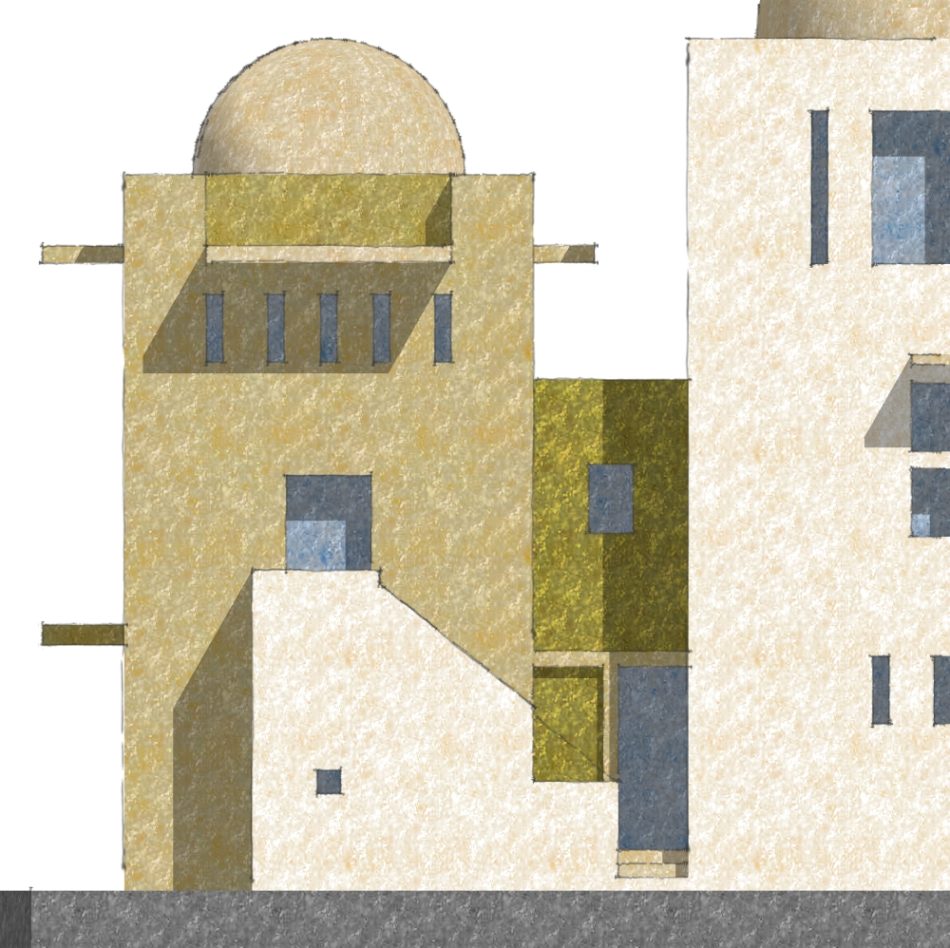
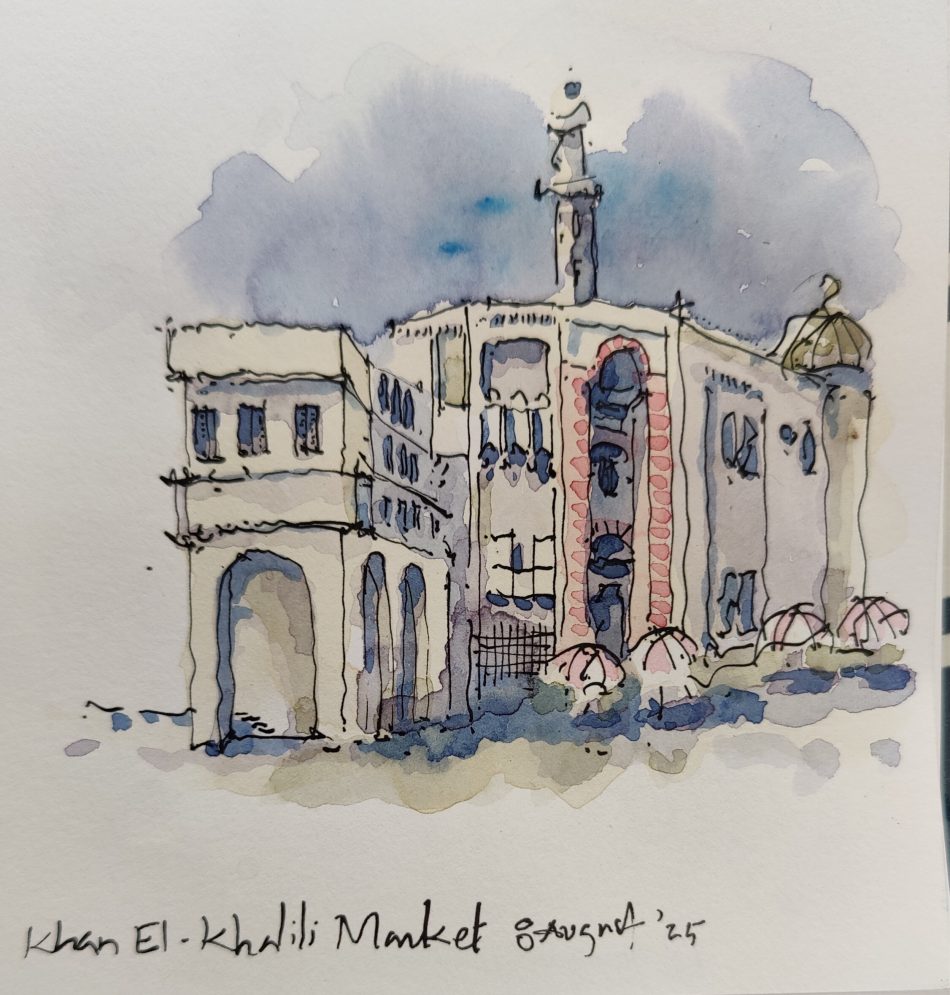
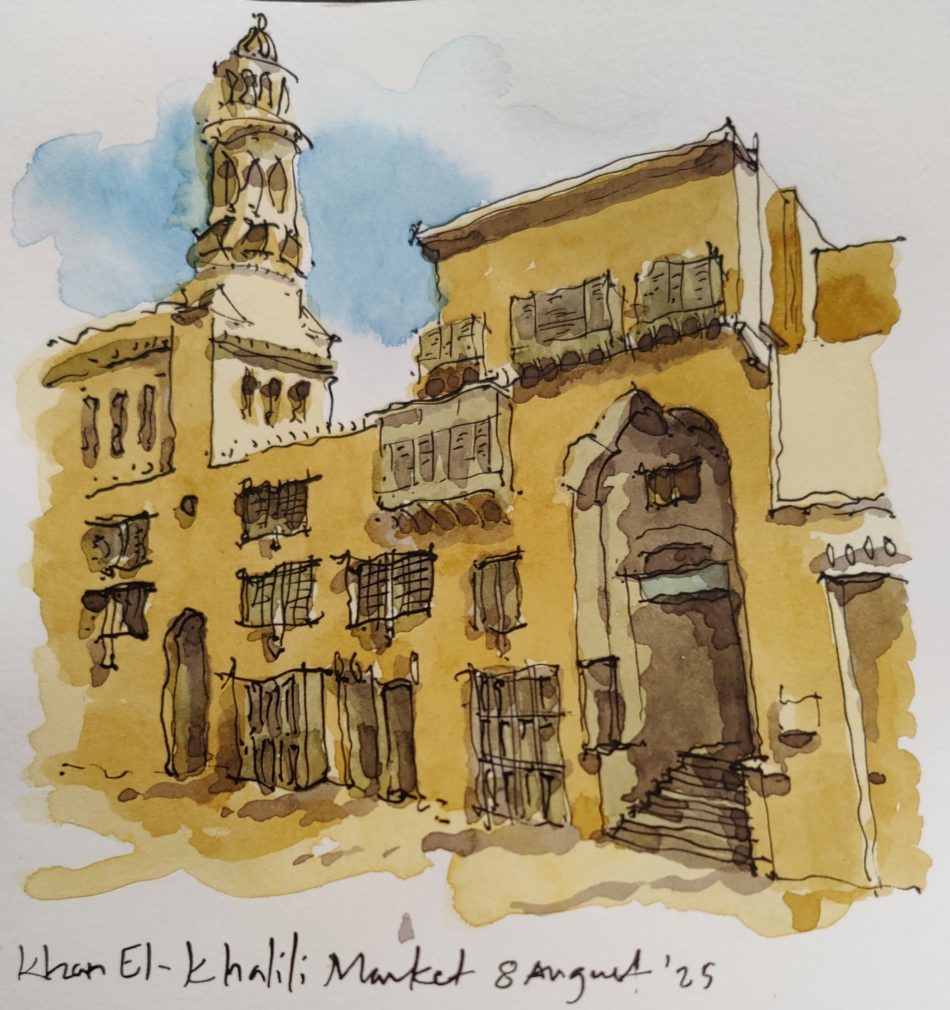
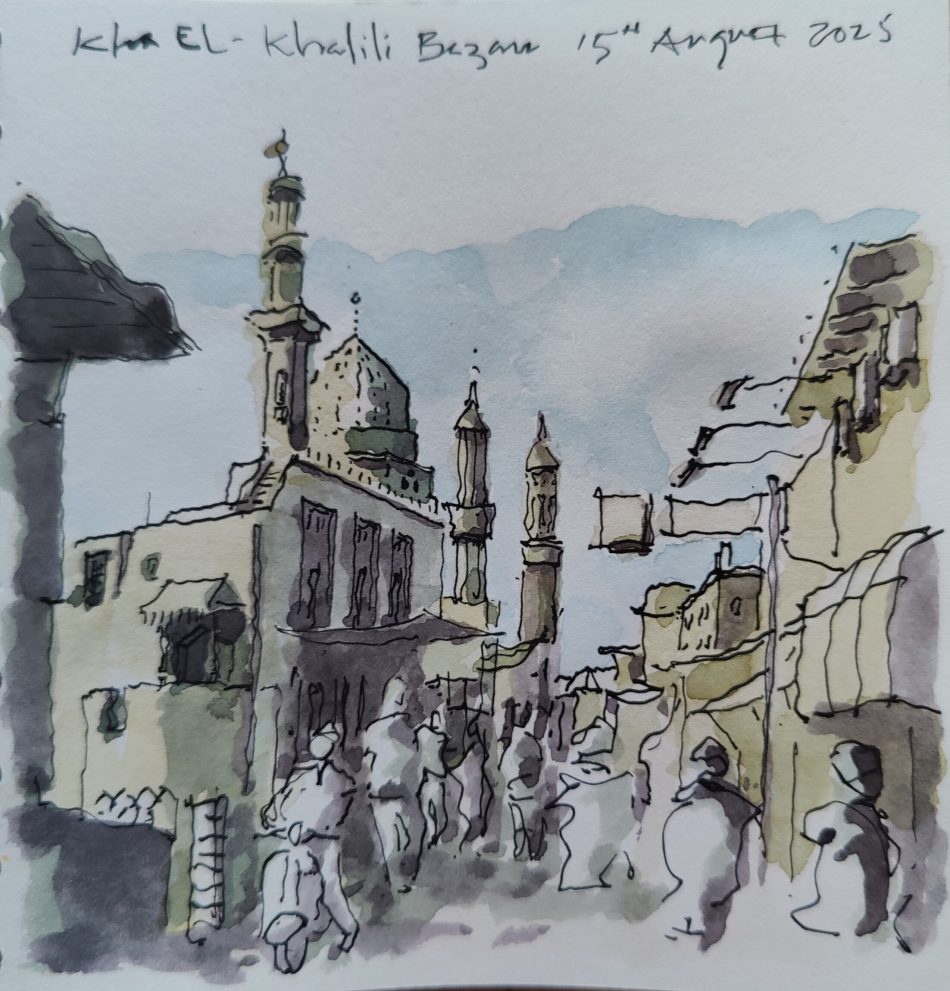
An exploration of urban blocks, vistas, streets and 3D forms from Cairo, the Khan el-Khalili Bazaar, New Gourna near Luxor and Bedouin housing in Dahab.
Hassan Fathy, the Egyptian architect designed the village at New Gourna using traditional three dimensional forms. His projects focus on vernacular mud brick and incorporate passive cooling techniques. Cooling is created using passive stack, un-glazed earthenware pottery and naturally occurring wind patterns.
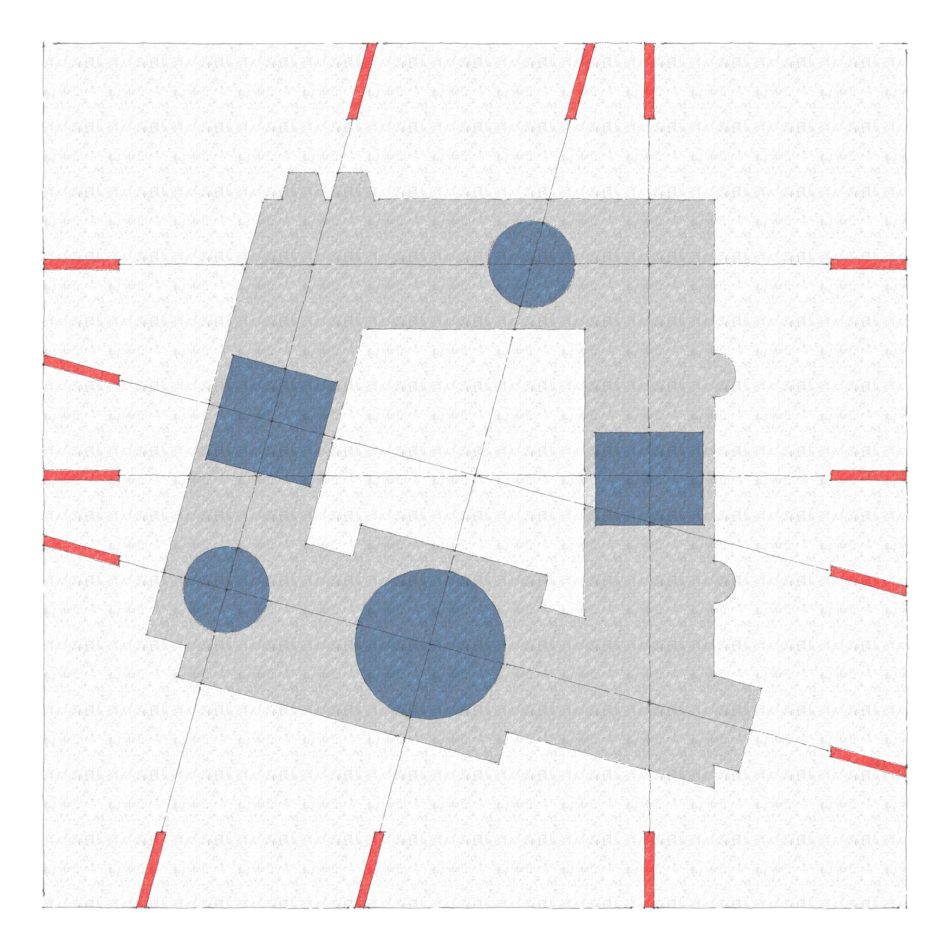
The Plan Diagram:
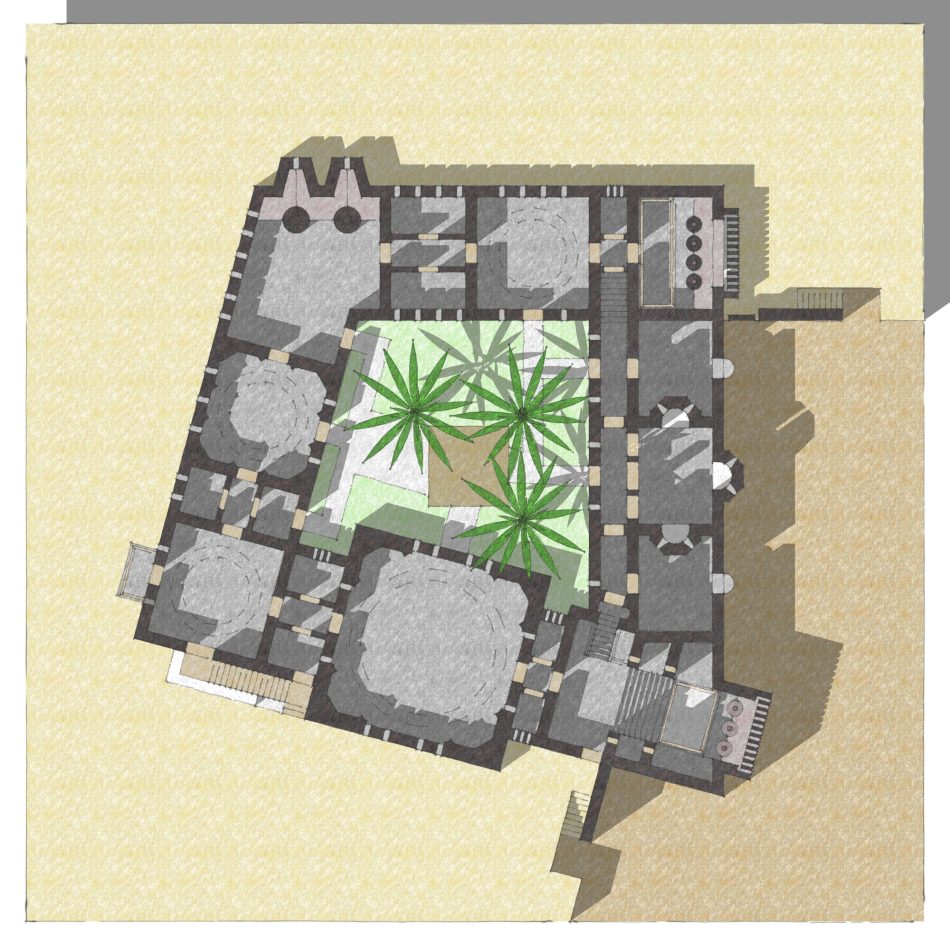
The central courtyard theme with planting and water to create a micro-climate:
Un-glazed earthenware vessels suspended high in a tower were filled with water. These jars perspire and the natural air currents driven by both the prevailing wind and the passive-stack effect pass over them. The air-flow is cooled by taking the latent-heat of the vaporisation of water on the outer surface of the jars. The air movement naturally drops down into the thick mud-brick walled chambers of the house living areas.
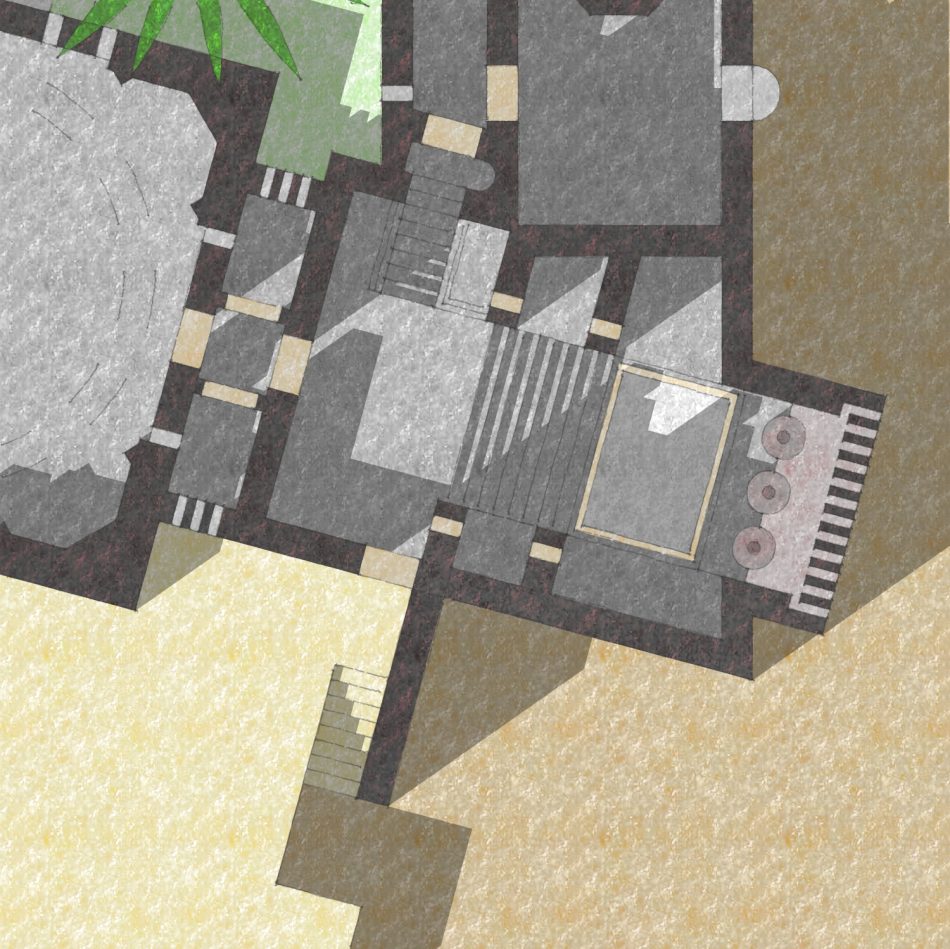
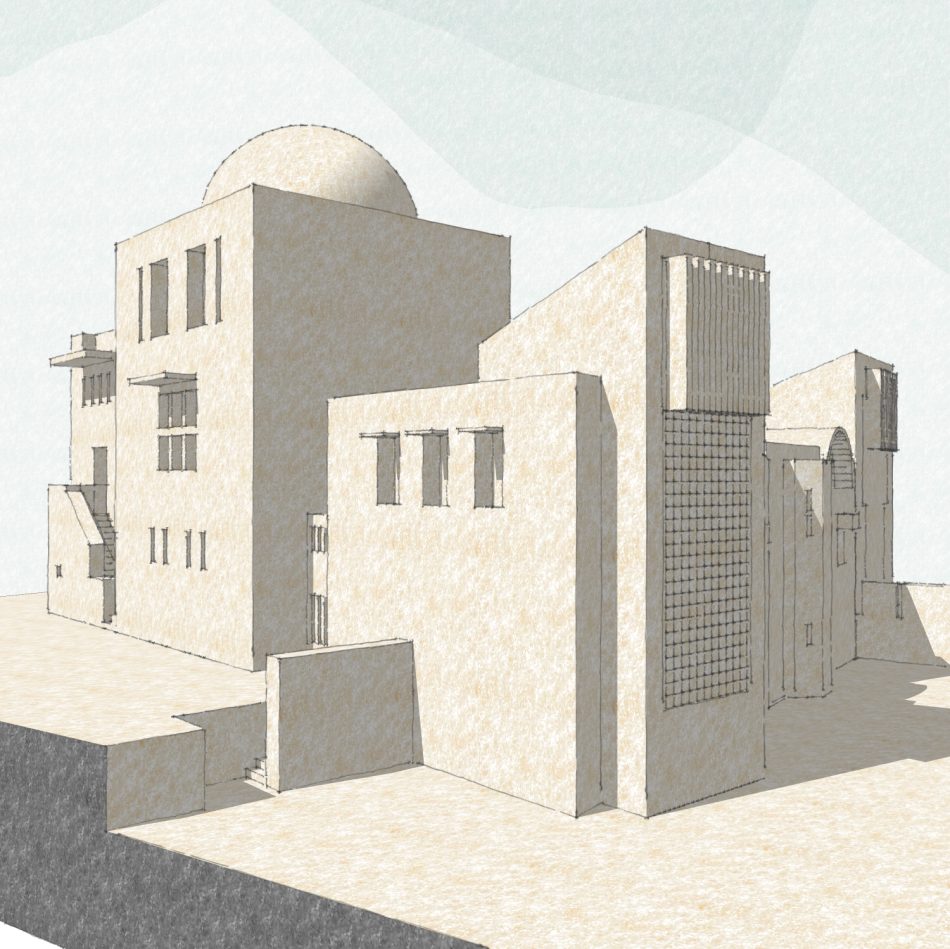
By contrast to the pale terracotta of the now derelict and disintegrating New Gourna we have a Bedouin styled residence in Dahab. This residence is called Sindbad House on Goat Street on the Gulf of Aqaba at Dahab:
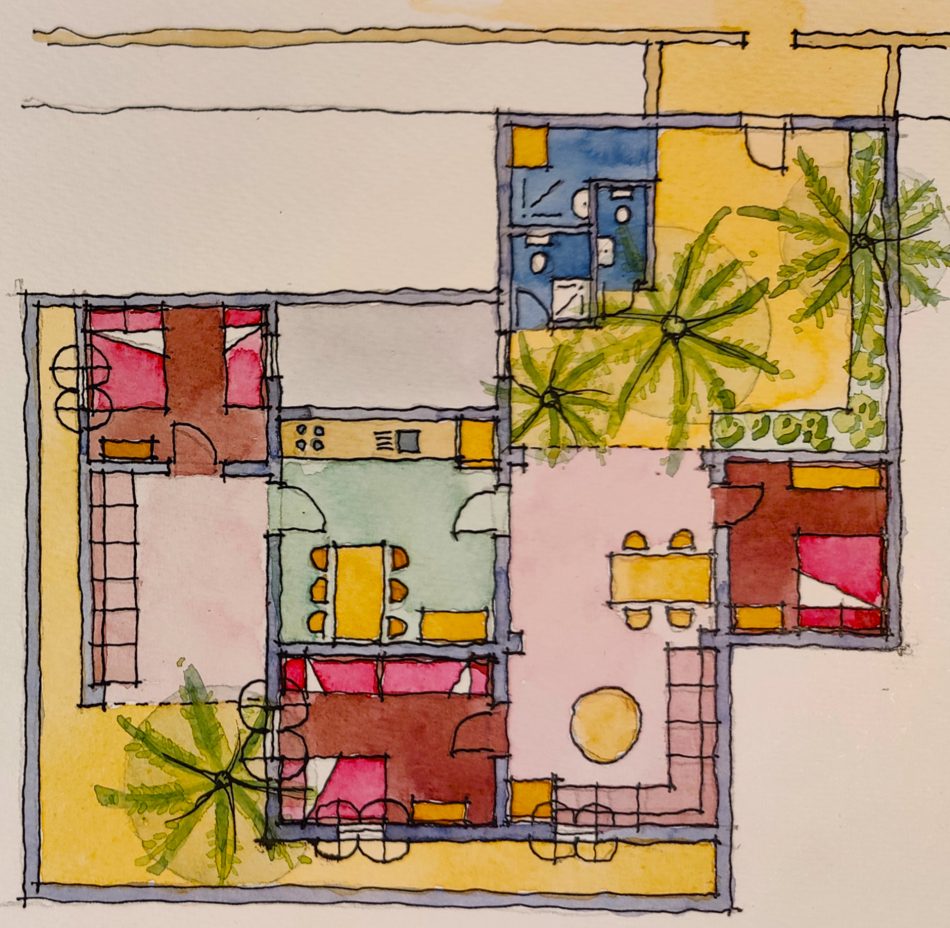
Sindbad House, using the same courtyard typology of Fathy’s work. In this case the courtyard is filled with Palms, Hibiscus, Gardenia and Bougainvillea along with brightly coloured fabrics.